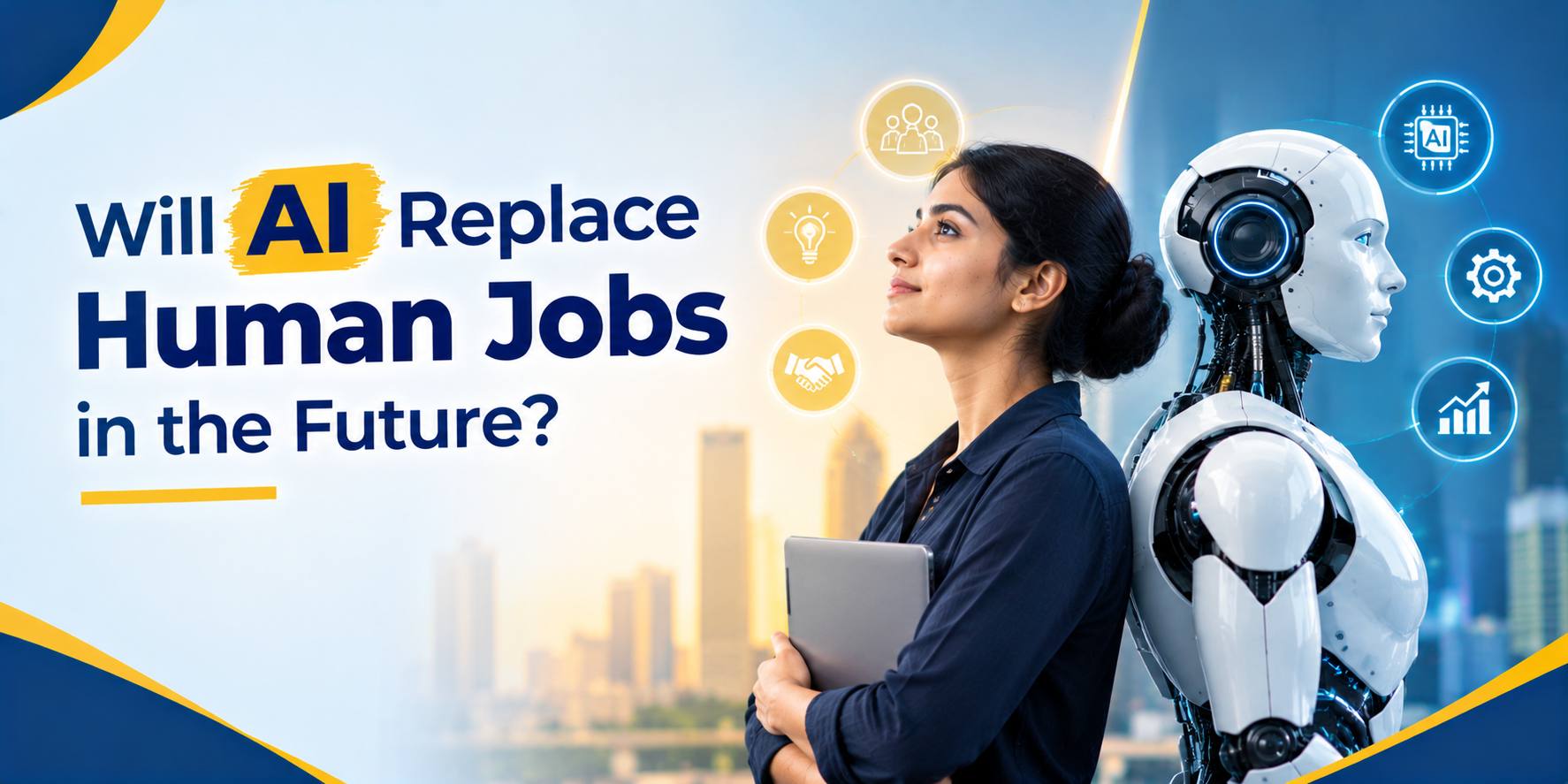
<h2>Why HR Is the Next Big Frontier for AI Agents</h2>
<p>Artificial intelligence has already reshaped customer support, marketing, and software development. But in 2027, the most dramatic shift is happening inside human resources departments. Companies are deploying AI agents to handle repetitive, high-volume HR tasks — while freeing human recruiters to focus on what they do best: connecting with people.</p>
<p>In this guide, we break down how AI agents are being used in HR today, where the risks lie, and what skills HR professionals must build to stay relevant in an AI-first workplace.</p>
<h2>What Is an AI Agent in HR?</h2>
<p>An AI agent is more than a chatbot. Unlike traditional automation, which follows rigid rules, an AI agent can reason, plan, and take multi-step actions toward a goal. In HR, this means an agent can:</p>
<ul>
<li>Read a job description and automatically post it to multiple job boards</li>
<li>Screen hundreds of resumes against role requirements</li>
<li>Schedule interviews by coordinating calendars across time zones</li>
<li>Send personalized follow-up emails based on candidate responses</li>
<li>Onboard new hires by assigning training modules and collecting documents</li>
</ul>
<p>All of this happens with minimal human intervention — but with human oversight at critical decision points.</p>
<h2>5 Real Use Cases of AI Agents in Hiring (2027)</h2>
<h3>1. Resume Screening at Scale</h3>
<p>AI agents can parse thousands of resumes in minutes, ranking candidates against structured criteria like skills, experience, and education. Leading Indian companies now use agents that explain <em>why</em> a candidate was shortlisted — a huge improvement over the "black box" screening tools of the past.</p>
<h3>2. Interview Scheduling Without Email Ping-Pong</h3>
<p>Scheduling is one of the biggest time sinks in recruitment. AI agents connect to calendars, propose slots, send reminders, and reschedule automatically when conflicts arise. Recruiters save 8–10 hours per week on average.</p>
<h3>3. Conversational Pre-Screening</h3>
<p>Agents conduct initial phone or chat screens — asking about notice periods, salary expectations, and role fit — and surface only qualified candidates to human recruiters. This is especially useful for high-volume roles like BPO, retail, and campus hiring.</p>
<h3>4. Personalized Candidate Engagement</h3>
<p>AI agents send timely, personalized updates to candidates at every stage. This dramatically improves candidate experience — a critical differentiator in India's competitive talent market.</p>
<h3>5. Automated Onboarding</h3>
<p>From document collection and IT provisioning requests to 30-day check-in surveys, onboarding agents reduce the administrative burden on HR teams and give new hires a smoother first experience.</p>
<h2>The Human Touch: What AI Agents Can't Do</h2>
<p>Despite these capabilities, there are critical areas where human HR professionals remain irreplaceable:</p>
<ul>
<li><strong>Judgment calls on culture fit:</strong> AI can match keywords, but it cannot assess whether a candidate will thrive in your team's culture.</li>
<li><strong>Negotiation and empathy:</strong> Salary discussions, difficult conversations, and conflict resolution require emotional intelligence that AI lacks.</li>
<li><strong>Ethical oversight:</strong> Every AI hiring decision must be audited for bias. Humans must own this responsibility.</li>
<li><strong>Building relationships:</strong> Employer branding, campus relationships, and executive search depend on trust — a fundamentally human skill.</li>
</ul>
<h2>The Bias Problem: What HR Teams Must Watch For</h2>
<p>AI agents are only as fair as the data they're trained on. If historical hiring data shows bias against certain groups, the agent will replicate — and even amplify — that bias. In 2027, forward-thinking companies are:</p>
<ul>
<li>Auditing AI screening decisions quarterly for demographic parity</li>
<li>Training agents on curated, balanced datasets</li>
<li>Keeping humans in the loop for all final hiring decisions</li>
<li>Using explainable AI tools that show <em>why</em> a candidate was ranked a certain way</li>
</ul>
<p>India's new data protection frameworks also require transparency in automated decision-making — HR teams must be ready to explain how their AI agents work.</p>
<h2>Skills HR Professionals Need in 2027</h2>
<p>The rise of AI agents doesn't eliminate HR jobs — it transforms them. HR professionals who thrive in 2027 will have:</p>
<ul>
<li><strong>AI literacy:</strong> Understanding what AI agents can and cannot do</li>
<li><strong>Data fluency:</strong> Reading dashboards, spotting trends, and interpreting hiring metrics</li>
<li><strong>Prompt engineering basics:</strong> Writing effective instructions for AI tools</li>
<li><strong>Ethical judgment:</strong> Making fair decisions when AI recommendations conflict with human values</li>
<li><strong>Change management:</strong> Helping employees adapt to AI-augmented workflows</li>
</ul>
<p>If you're an HR professional looking to upskill, our <a href="/blog/ai-courses-after-12th-best-career-options-in-india-2027">AI courses</a> and <a href="/blog/agentic-ai-explained-the-next-frontier-beyond-generative-ai">Agentic AI training</a> can help you build these skills from the ground up.</p>
<h2>How to Get Started with AI Agents in Your HR Team</h2>
<ol>
<li><strong>Audit your current HR processes.</strong> Identify the 3 most time-consuming, repetitive tasks.</li>
<li><strong>Choose one use case to pilot.</strong> Resume screening or interview scheduling are the easiest wins.</li>
<li><strong>Pick a tool that supports Indian hiring needs.</strong> Ensure GDPR/DPDP compliance and multilingual support.</li>
<li><strong>Run a 30-day pilot with human oversight.</strong> Track time saved, candidate quality, and bias metrics.</li>
<li><strong>Scale gradually.</strong> Expand to onboarding, engagement, and analytics only after the pilot succeeds.</li>
</ol>
<h2>Frequently Asked Questions</h2>
<h3>Will AI agents replace HR recruiters?</h3>
<p>No. AI agents will replace repetitive <em>tasks</em>, but HR roles will evolve toward strategy, relationship-building, and ethical oversight — areas where human judgment remains essential.</p>
<h3>Are AI hiring agents legal in India?</h3>
<p>Yes, but they must comply with the Digital Personal Data Protection Act (DPDP). Companies must ensure transparency, data minimization, and human oversight in automated hiring decisions.</p>
<h3>Which industries use AI agents in HR the most?</h3>
<p>IT services, BPO, e-commerce, and banking are leading adopters due to high-volume hiring needs. Manufacturing and healthcare are catching up fast.</p>
<h2>Final Thoughts</h2>
<p>AI agents are not here to replace HR professionals — they're here to free them. Companies that deploy AI agents thoughtfully, with strong human oversight, will hire faster, reduce bias, and deliver a better candidate experience. Those that treat AI as a shortcut without ethical guardrails will face reputational and legal risks.</p>
<p>The question in 2027 isn't whether to adopt AI agents in HR — it's how to do it responsibly. Start small, measure everything, and keep humans at the center of every decision.</p>