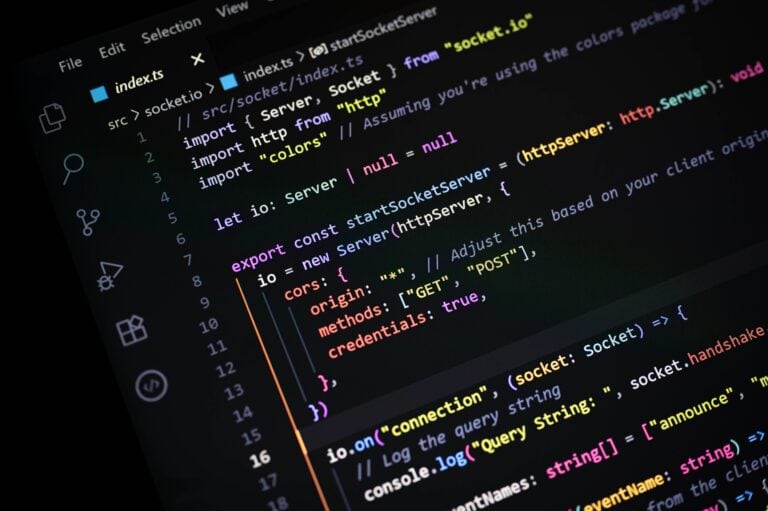
What Is TypeScript and Why Are Developers Using It?
Web development is continuously evolving, and developers are always looking for better ways to write clean, reliable, and maintainable code. One programming language that has become increasingly popular in modern web development is TypeScript.
TypeScript is widely used by developers to build large-scale applications, improve code quality, and reduce common programming errors.
If you are learning programming or already know JavaScript, understanding TypeScript can be a valuable step towards becoming a better web developer.
In this blog, we will explore what TypeScript is, how it works, its key features, benefits, and why developers are using it in modern web development.
What Is TypeScript?
TypeScript is an open-source programming language developed and maintained by Microsoft. It is built on top of JavaScript and adds additional features, especially static typing.
In simple words, TypeScript helps developers define what type of data a variable, function, or object should contain.
For example, a developer can specify that a variable should store a number, text, or a Boolean value. This helps identify certain coding mistakes before the application runs.
TypeScript code is converted into JavaScript, allowing it to run in browsers and JavaScript environments.
How Does TypeScript Work?
TypeScript works by adding type information and other development features to JavaScript.
Here is a simple process:
Write TypeScript Code: Developers write code using TypeScript syntax and features.
Type Checking: The TypeScript compiler checks the code for type-related errors.
Compilation: TypeScript code is converted into JavaScript.
Execution: The generated JavaScript runs in a browser or compatible runtime environment.
This process helps developers identify potential problems during development rather than discovering every issue after running the application.
TypeScript vs JavaScript: What Is the Difference?
JavaScript and TypeScript are closely related, but they have some important differences.
FeatureJavaScriptTypeScriptLanguage TypeProgramming languageJavaScript with additional featuresType SystemDynamic typingStatic type checkingCompilationUsually executed directly by JavaScript enginesCompiled or transpiled into JavaScriptError DetectionMany errors appear during executionMany type errors can be identified during developmentLearningBeginner-friendlyEasier after learning JavaScriptLarge ProjectsCan be used for large projectsProvides additional tools for maintaining large projects
Which one should you learn first?
Beginners can start with JavaScript to understand programming fundamentals. After gaining basic knowledge, learning TypeScript can help them write more structured and maintainable code.
Key Features of TypeScript
TypeScript provides several features that make application development more organised and efficient.
1. Static Typing
Static typing allows developers to define the expected data types of variables, functions, and other elements.
For example:
let age: number = 21;
let name: string = "Rahul";
This helps identify incorrect data types during development.
2. Type Inference
TypeScript can automatically understand the type of a variable based on its assigned value.
For example:
let city = "Delhi";TypeScript automatically identifies the variable as a string.
3. Interfaces
Interfaces help developers define the structure of objects.
For example:
interface Student {
  name: string;
  age: number;
}

const student: Student = {
  name: "Rahul",
  age: 21
};
This makes it easier to maintain consistent data structures across an application.
4. Classes and Object-Oriented Programming
TypeScript supports classes, inheritance, access modifiers, and other object-oriented programming concepts.
These features help developers organise code and create reusable components.
5. Better Development Tools
TypeScript provides useful editor features such as autocomplete, code navigation, type checking, and improved error detection.
These features can make the development process more efficient.
Why Are Developers Using TypeScript?
TypeScript is popular because it provides additional development support while remaining compatible with the JavaScript ecosystem.
Here are some important reasons developers use it:
1. Fewer Common Coding Errors
Type checking helps identify many mistakes before code execution, reducing certain types of programming errors.
2. Easier Code Maintenance
TypeScript makes it easier to understand variables, functions, and data structures, particularly in large projects.
3. Better Team Collaboration
When multiple developers work on the same project, clear type definitions help everyone understand how different parts of the application should work.
4. Improved Developer Productivity
Features such as autocomplete, type checking, and code suggestions can help developers write and understand code more efficiently.
5. Suitable for Large Applications
TypeScript is useful for applications with multiple components, complex data structures, and larger development teams.
Where Is TypeScript Used?
TypeScript is used across different areas of modern software development.
Some common applications include:
Frontend Development: Building interactive websites and user interfaces.
Backend Development: Developing server-side applications using Node.js.
Full Stack Development: Managing frontend and backend code in a structured way.
Enterprise Applications: Developing large applications that require maintainable code.
Web Application Development: Creating scalable and organised web applications.
Popular technologies and frameworks that support TypeScript include Angular, React, Next.js, and Node.js.
How to Start Learning TypeScript as a Beginner
If you want to learn TypeScript, following a structured learning path can make the process easier.
Step 1: Learn JavaScript Fundamentals
Understand variables, functions, arrays, objects, loops, and basic programming concepts.
Step 2: Understand Data Types
Learn how TypeScript handles strings, numbers, Boolean values, arrays, objects, and other types.
Step 3: Practise Functions and Interfaces
Understand function parameters, return types, interfaces, and type aliases.
Step 4: Learn Classes and Advanced Types
Explore classes, inheritance, generics, unions, and other important TypeScript concepts.
Step 5: Build Practical Projects
Apply your knowledge by creating small applications and gradually moving towards larger projects.
Some beginner-friendly project ideas include:
To-Do List Application
Student Management System
Expense Tracker
Weather Application
Personal Portfolio Website
Practical projects can help you understand how TypeScript works in real development environments.
Is TypeScript Worth Learning in 2027?
Yes, TypeScript is a valuable skill for developers interested in modern web development.
As applications become more complex, developers need tools that help them maintain code quality, improve collaboration, and manage large codebases.
TypeScript provides these capabilities while allowing developers to work with the existing JavaScript ecosystem.
However, it is important to remember that TypeScript does not replace JavaScript. Learning JavaScript fundamentals first provides a stronger foundation for understanding TypeScript.
Start Your Coding Journey with AIVASU
Learning modern programming languages can help students develop practical technical skills and explore opportunities in the IT industry.
At AIVASU – Aivasu Tech Institute, students and working professionals can explore technology-focused learning programmes, including Python Programming, Full Stack Development, AI Engineering, Generative AI, Data Science, and other emerging technologies.
Whether you are starting your coding journey or looking to upgrade your programming knowledge, building strong fundamentals is an important step towards your technology career.
Start learning today and explore your future in technology with AIVASU!
Website: https://www.aivasu.com/
Email: [email protected]
Phone: +91 96677 08830
Address: 2nd Floor, 155, Opp. Metro Pillar No. 354, Kapil Vihar, Pitampura, New Delhi – 110034.
Frequently Asked Questions (FAQs)
1. What is TypeScript used for?
TypeScript is used to develop web applications, frontend interfaces, backend services, and large-scale software projects with additional type-checking features.
2. Is TypeScript better than JavaScript?
Neither is universally better. JavaScript is suitable for many applications, while TypeScript adds static type checking and development features that can be especially useful in larger projects.
3. Is TypeScript easy for beginners?
TypeScript is easier to understand after learning JavaScript fundamentals. Beginners should first understand basic programming concepts and then move towards TypeScript.
4. Is TypeScript used in frontend development?
Yes. TypeScript is widely used in frontend development with technologies such as React, Angular, and Next.js.
5. Can TypeScript be used for backend development?
Yes. Developers can use TypeScript with Node.js and frameworks such as NestJS to build backend applications and APIs.
6. Does TypeScript replace JavaScript?
No. TypeScript builds on JavaScript and is converted into JavaScript before execution in standard JavaScript environments.
7. What should I learn before TypeScript?
Learning JavaScript basics, including variables, functions, arrays, objects, and programming logic, is recommended before starting TypeScript.